Light and Flaky Croissants
Highlighted under: Effortless Cooking Creations
I never knew the joy of fresh, homemade croissants until I tackled this recipe. The moment I pulled a tray from the oven, the warm aroma filled my kitchen and beckoned everyone over. What makes these croissants truly special is the delicate layers created through the lamination process. As I watched them puff up beautifully, I felt a sense of accomplishment, knowing that with patience and the right technique, I could create bakery-worthy pastries at home. They are a delightful treat for brunch or a special breakfast!
When I first tried making croissants, I expected a simple outcome. However, embracing the process taught me the beauty of patience. I experimented with different proofs and folds, leading to beautifully airy, flaky results that exceeded my expectations.
The best tip I can give is to keep everything cold, especially the butter. It ensures that the layers maintain their integrity during baking, resulting in that irresistible crunch and flakiness that we all love. Trust the process; it’s worth it when you savor that first bite!
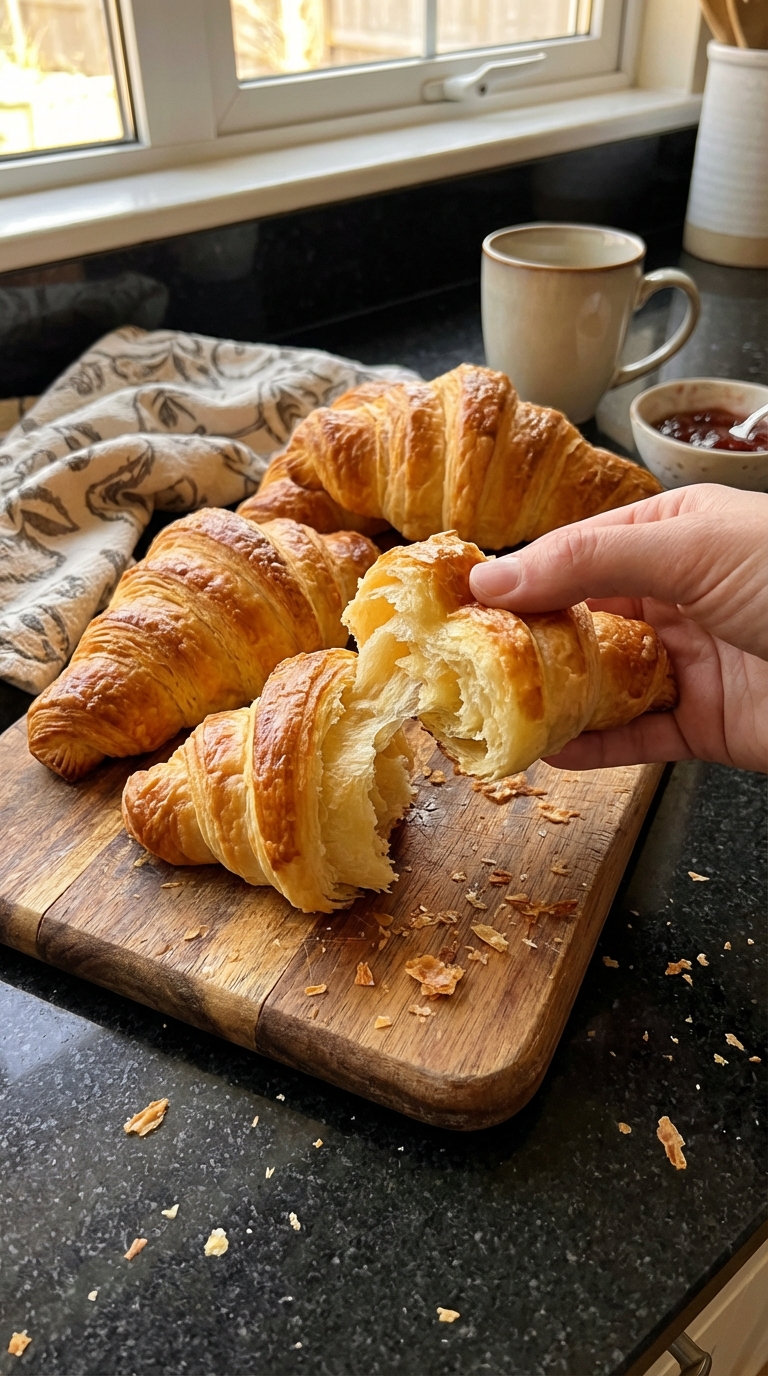
Why You'll Love These Croissants
- Buttery layers that melt in your mouth
- Perfectly flaky exterior with a tender inside
- Customizable with sweet or savory fillings
Understanding the Lamination Process
The magic of croissants lies in the lamination process, which creates the signature flaky texture. By incorporating layers of cold butter into the dough, you end up with countless thin layers that puff up during baking. Each fold and roll contributes to the final product, so I recommend keeping everything chilled. If the dough becomes too warm at any point, it can be harder to achieve the desired layers. A cool kitchen helps, or consider using a marble surface to keep the dough cool as you work.
Using the right type of butter is also crucial. Opt for high-fat, unsalted butter for better flavor and texture. The butter should be soft but still cold when you start the lamination process. If it's too warm, it can leak out during baking, which can lead to less flaky and more greasy croissants. For the best results, take your time rolling and folding the dough, as each layer builds on the last.
Shaping the Croissants
Shaping croissants can be intimidating, but with practice, it becomes intuitive. After cutting the dough into triangles, ensure you roll them tightly from the base to the tip. A tight roll helps maintain the shape as they rise and bake. Don’t be afraid to adjust the size of your triangles; larger triangles will yield bigger croissants while smaller triangles result in mini pastries perfect for brunch gatherings.
Before placing them on the baking sheet, make sure to pinch the tip of each triangle to secure the shape. This will prevent them from unrolling during proofing or baking, which is a common issue faced by novice bakers. For a whimsical touch, you can create crescent shapes or even twist the ends toward each other to form a circle, adding visual appeal to your croissants.
Ingredients
Gather these ingredients to start your croissant adventure:
Dough Ingredients
- 4 cups all-purpose flour
- ½ cup cold milk
- ½ cup cold water
- 3 tablespoons sugar
- 2 teaspoons salt
- 1 packet active dry yeast
- 10 tablespoons unsalted butter, softened
Butter Layering
- 1 cup cold unsalted butter (for lamination)
Make sure to measure accurately for the best results!
Instructions
Follow these steps to create the perfect croissants:
Prepare the Dough
In a bowl, mix warm water, sugar, and yeast. Let it sit for 5 minutes until frothy. In another bowl, combine flour and salt. Once the yeast is ready, add it to the flour mixture along with cold milk. Knead until a smooth dough forms. Let the dough rise in a warm place for about 90 minutes.
Lamination Process
Roll out the dough into a rectangle. Place the cold butter in the center, folding the edges over it. Roll out again into a larger rectangle and fold it into thirds. Repeat this process 3-4 times, chilling the dough between each fold.
Shape the Croissants
Roll out the final dough into a rectangle and cut it into triangles. Starting from the base of each triangle, roll each one up tightly to form a croissant shape. Place them on a baking sheet lined with parchment paper.
Proof and Bake
Let the shaped croissants proof for 30-40 minutes until doubled in size. Preheat your oven to 400°F (200°C). Brush the croissants with an egg wash and bake for 20-25 minutes until golden brown.
Enjoy your homemade croissants warm, fresh out of the oven!
Pro Tips
- Always use cold ingredients for the best lamination results. You can also freeze the shaped croissants before baking for fresh pastries at a later time.
Storing and Reheating Croissants
To maintain the freshness of your croissants, store them in an airtight container at room temperature for up to two days. If you need to keep them longer, consider freezing them. Wrap each cooled croissant in plastic wrap followed by aluminum foil to prevent freezer burn, and they can be stored for up to a month. When ready to enjoy, reheat them directly from the freezer in a preheated oven at 350°F (175°C) for about 10-15 minutes for a crispy exterior.
Reheating croissants in the toaster oven can also yield excellent results. This method crisps the outer layer while keeping the inside tender. Avoid microwaving, as this can make your croissants chewy rather than flaky. If you’ve added fillings, remember that they may need extra time to heat through safely.
Filling Options and Variations
These croissants are the perfect canvas for creativity. You can easily customize them with fillings that suit your taste. For savory options, try incorporating cheese and ham or a spread of pesto with sundried tomatoes. Sweet alternatives could include almond paste, chocolate, or even a spiced apple filling for a seasonal twist. Just be mindful not to overstuff them, as excessive filling can lead to spillage during the baking process.
If you prefer a different flavor, consider adding spices like cinnamon to the dough or dusting the croissants with powdered sugar once they cool. Brushing the tops with a mixture of butter and honey before baking can also add a delightful glaze. With so many options, you can create a variety of croissants to suit any gathering or mood.
Questions About Recipes
→ Can I use whole wheat flour instead of all-purpose flour?
While you can substitute some of the flour, it may change the texture and flakiness of the croissants.
→ What is the best way to store leftover croissants?
Store them in an airtight container at room temperature for up to 2 days. For longer storage, freeze them.
→ Can I make croissants without yeast?
Traditional croissants require yeast for leavening. However, you could try a no-yeast recipe, but they won’t have the same texture.
→ How do I know when my croissants are done baking?
They should be golden brown and sound hollow when tapped on the bottom.
Light and Flaky Croissants
Created by: The Cheflinaskitchen Team
Recipe Type: Effortless Cooking Creations
Skill Level: Intermediate
Final Quantity: 12 croissants
What You'll Need
Dough Ingredients
- 4 cups all-purpose flour
- ½ cup cold milk
- ½ cup cold water
- 3 tablespoons sugar
- 2 teaspoons salt
- 1 packet active dry yeast
- 10 tablespoons unsalted butter, softened
Butter Layering
- 1 cup cold unsalted butter (for lamination)
How-To Steps
In a bowl, mix warm water, sugar, and yeast. Let it sit for 5 minutes until frothy. In another bowl, combine flour and salt. Once the yeast is ready, add it to the flour mixture along with cold milk. Knead until a smooth dough forms. Let the dough rise in a warm place for about 90 minutes.
Roll out the dough into a rectangle. Place the cold butter in the center, folding the edges over it. Roll out again into a larger rectangle and fold it into thirds. Repeat this process 3-4 times, chilling the dough between each fold.
Roll out the final dough into a rectangle and cut it into triangles. Starting from the base of each triangle, roll each one up tightly to form a croissant shape. Place them on a baking sheet lined with parchment paper.
Let the shaped croissants proof for 30-40 minutes until doubled in size. Preheat your oven to 400°F (200°C). Brush the croissants with an egg wash and bake for 20-25 minutes until golden brown.
Extra Tips
- Always use cold ingredients for the best lamination results. You can also freeze the shaped croissants before baking for fresh pastries at a later time.
Nutritional Breakdown (Per Serving)
- Calories: 250 kcal
- Total Fat: 16g
- Saturated Fat: 10g
- Cholesterol: 45mg
- Sodium: 120mg
- Total Carbohydrates: 28g
- Dietary Fiber: 1g
- Sugars: 2g
- Protein: 5g